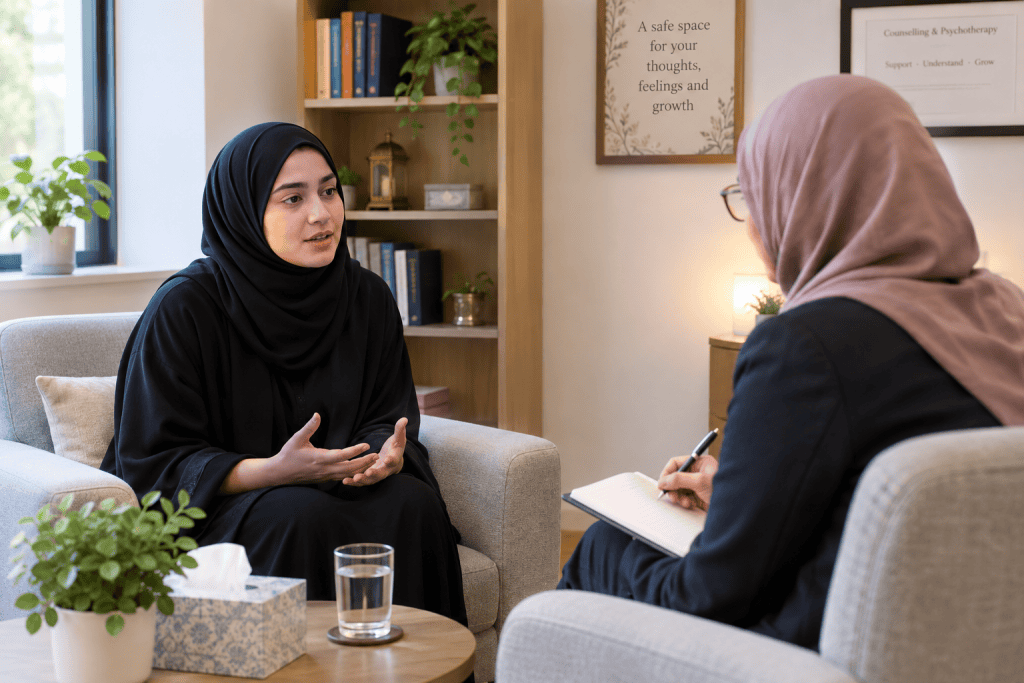
Muslim counseling is a culturally and faith-sensitive form of professional therapy that considers a client’s Islamic beliefs, values, family relationships and lived experiences. It uses established counseling approaches to address concerns such as anxiety, depression, trauma, grief and relationship difficulties, while respecting the role faith may play in emotional well-being and recovery. Muslim counseling does not replace clinical mental health treatment; instead, it provides support within a framework that Muslim clients may find more relevant, comfortable and personally meaningful.
In this blog, we discuss:
- What Is Muslim Counseling?
- Why a Culturally Aware Approach Matters?
- What is Muslim Marriage Counseling?
- Who Benefits From Muslim Counseling or Support?
- How Inner Peace Therapies Can Help?
- Final Thoughts
For many Muslims, the idea of walking into a therapist’s office comes with an unspoken worry: will this person understand where I come from? Will they respect my faith, or will I have to explain and defend it before we even get to the real problem? Muslim counseling exists to remove that barrier. It combines proven therapeutic methods with a genuine understanding of Islamic values, so clients can address life’s challenges without feeling like they have to choose between their faith and their mental health.
This post breaks down what Muslim counseling actually looks like, who tends to benefit from it, and how a practice like Inner Peace Therapies approaches this kind of care.
What Is Muslim Counseling?
At its core, Muslim counseling is standard, evidence-based therapy delivered through a lens that respects Islamic beliefs, family structure, and cultural context. It is not religious instruction, and a counselor practicing this way isn’t there to interpret scripture or issue religious rulings. Instead, the goal is to make sure the clinical process feels safe, relevant, and free of judgment for someone whose worldview is shaped by their faith.
That might mean being mindful of prayer times when scheduling sessions, understanding the role of modesty in a client’s comfort level, or simply recognizing that decisions about marriage, parenting, or career often carry weight that extends beyond the individual to the whole family. Common concerns that bring people to this kind of therapy include identity and belonging, pressure between generations, acculturation stress, and the everyday anxieties of balancing faith with life in a society that doesn’t always share the same reference points.
Why a Culturally Aware Approach Matters?
Mental health stigma is not unique to any one community, but it shows up differently depending on cultural background. In many Muslim households, seeking therapy can feel like an admission of weakness, or even a sign of doubting one’s faith. That reluctance keeps people from getting help they genuinely need.
A culturally attuned approach to counseling changes that equation. When a therapist takes the time to understand a client’s religious practices and values rather than treating them as an obstacle, clients tend to open up faster and trust the process more. This kind of care applies well beyond marriage counseling too. It shows up in individual counseling for someone navigating anxiety or depression, in support for teens caught between two cultures, and in family counseling sessions where generational expectations are creating friction at home.
What is Muslim Marriage Counseling? A Closer Look
Marriage is one of the areas where faith based counseling tends to have the biggest impact. Divorce rates among Muslim couples in North America have been climbing, and many couples wait years before reaching out for help, often after resentment has already taken root.
Muslim marriage counseling focuses on identifying the patterns that are quietly damaging a relationship and helping both partners find their way back to each other. Some of the most common issues that come up include:
- Tension with in-laws or extended family
- Disagreements over money and financial responsibility
- Struggles with addiction
- Infidelity and the long road to rebuilding trust
- Communication that has broken down over time
- Unclear or unbalanced roles and responsibilities within the marriage
The work isn’t about assigning blame. It’s about helping couples understand what’s driving the disconnect and giving them practical tools to repair it, all while keeping their shared values and beliefs part of the conversation rather than something to work around.
Who Benefits From This Kind of Support?
Muslim counseling isn’t limited to couples or people in crisis. It tends to help a wide range of people, including:
- Individuals dealing with anxiety, depression, or the stress of navigating two cultures at once
- Couples preparing for marriage or working through ongoing conflict
- Families trying to bridge generational or cultural gaps between parents and children
- Teens and young adults figuring out how faith fits into their everyday lives and relationships
The common thread is a desire to work with someone who won’t need a lengthy explanation of why certain things matter, because they already understand.
How Inner Peace Therapies Can Help?
Inner Peace Therapies offers Muslim counseling designed around each client’s actual values and goals, not a generic template applied to everyone who walks through the door. Every treatment plan is shaped by what matters most to the individual or couple sitting in the room, including their religious and cultural background.
The practice offers more than marriage support. Clients can access couples counseling and premarital counseling for those preparing to build a life together, along with individual, family, and group counseling for a broader range of concerns. This means a client can find continuity of care even as their needs shift over time, whether that starts with individual therapy and later includes a spouse or the whole family.
As a therapist in Lombard, IL, Inner Peace Therapies also understands the practical side of getting help. Life is busy, and not everyone can commit to an in-person visit every week. That’s why the practice offers both in-office appointments and online sessions, making it easier for clients throughout the area to fit therapy into their schedules without added stress.
Perhaps most importantly, the team approaches every client with the understanding that reaching out for support is not a departure from faith. It’s an act of taking care of the responsibilities faith already asks of us, toward ourselves, our marriages, and our families.
Final Thoughts
Muslim counseling offers something a lot of people have been quietly hoping for: a space where therapy and faith aren’t in conflict. Whether the goal is working through anxiety, repairing a strained marriage, or helping a family communicate better, having a counselor who understands the full picture makes the process feel less like starting from scratch and more like finally being heard.
If you’re considering therapy and want a provider near Lombard who takes your beliefs and background seriously, Inner Peace Therapies is here to help. Reach out today to schedule a consultation and take the first step toward the kind of support that fits both your life and your values.